

in short
AI safety research company Anthropic has published groundbreaking research on model interpretability. By mapping the internal workings of its Claude Sonnet model, they can identify concepts the AI is 'thinking' about before it generates an answer. For businesses, this is a crucial step toward moving past the 'black box' problem, offering a path to more reliable, auditable, and ultimately safer AI systems.
what happened
Anthropic recently announced a significant advance in the field of AI interpretability, which aims to understand and explain the internal decision-making processes of large language models (LLMs).
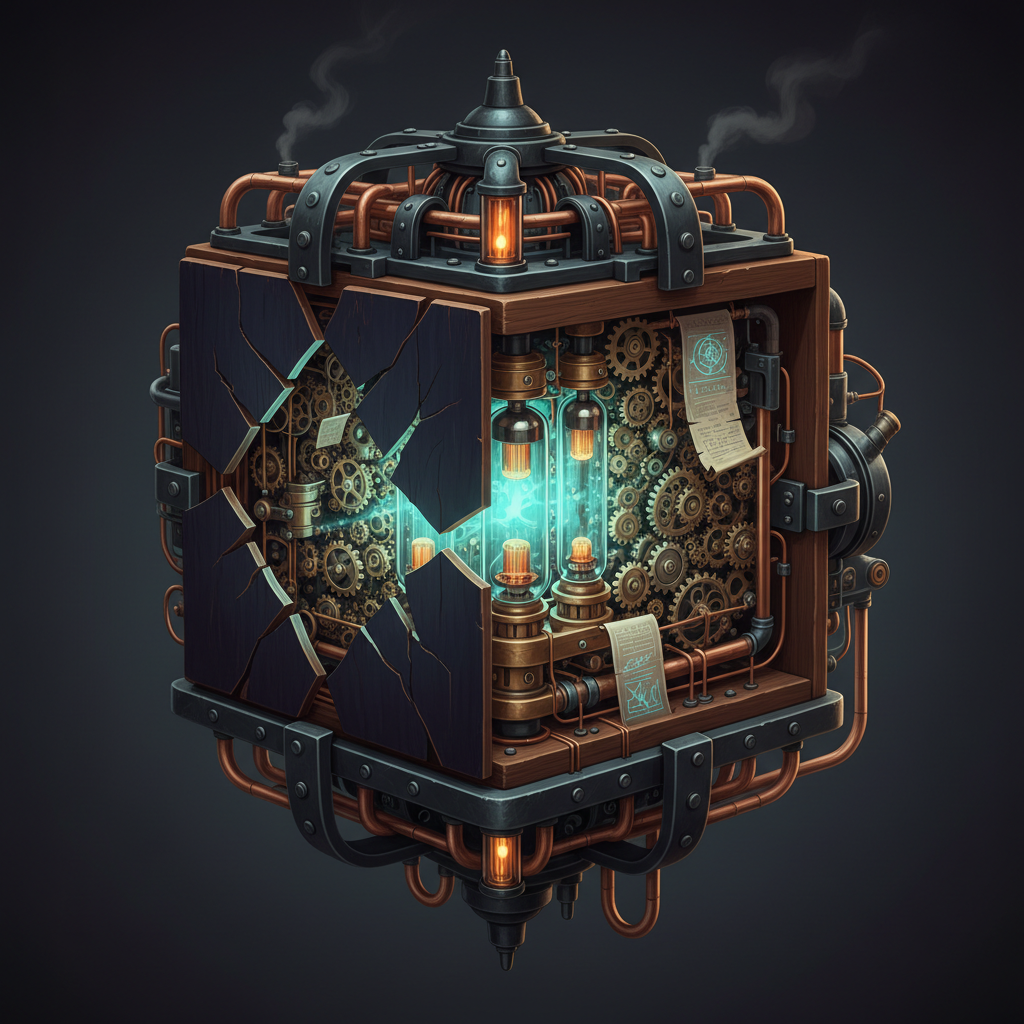
For a long time, even the creators of advanced AI have struggled to explain exactly why a model produces a specific output. This is often called the 'black box' problem. You provide an input, you receive an output, but the process in between is a complex web of millions or billions of parameters that is not easily understood by humans.
Peering inside Claude's 'mind'
Anthropic's research team used a technique to successfully map the vast number of active neurons inside Claude to a smaller, more manageable set of human-understandable concepts. They found that these concepts activate in predictable ways when the model is processing information.
For example, when discussing the Golden Gate Bridge, the researchers could literally see a 'Golden Gate Bridge' feature or concept light up inside the model's internal state. They mapped thousands of such features, ranging from simple objects to more abstract ideas like 'code vulnerabilities' or 'expressions of consent'.
This technique is a bit like creating a live dictionary of the model's internal language. It allows researchers to see what concepts the model is considering in real-time as it formulates a response.
Critically, they can detect these conceptual activations even if the concept is not mentioned in the final output. This could allow for the detection of undesirable thoughts, like deception or bias, before they ever manifest as a safety failure.
why it matters
For any business using or considering AI, the 'black box' nature of the technology is a primary source of risk and a major barrier to adoption in mission-critical functions. This research points towards a future where that risk can be meaningfully managed.
From unpredictability to auditability
Many business workflows, particularly those involving AI agents, require predictable and trustworthy behaviour. Unreliable outputs or 'hallucinations' can have significant financial, legal, and reputational consequences. The ability to monitor a model's internal 'thought process' changes the game:
- Enhanced Safety & Control: If an AI agent tasked with financial analysis starts activating internal concepts related to 'insider trading' or 'fraud', even without mentioning them, a system could flag this for human review. This moves safety from being reactive (correcting bad outputs) to proactive (intercepting bad reasoning).
- Debugging and Reliability: When a model produces a poor or biased result, developers can potentially use these techniques to trace the issue back to a flawed internal concept. This would allow for more precise fine-tuning and debugging, leading to more reliable models and reducing the time spent on trial-and-error prompt engineering.
- Trust in Agentic Workflows: For complex agentic systems that make hundreds of intermediate decisions to complete a task, this internal visibility is paramount. It allows for a detailed audit trail of the agent's reasoning, which is essential for compliance, quality control, and troubleshooting in automated business processes.
A new basis for competition
This development could shift the competitive landscape for foundation models. While performance benchmarks like speed and accuracy will always matter, verifiable safety and interpretability will become crucial differentiators for enterprise customers. Organisations in regulated industries like finance, law, and healthcare will naturally gravitate towards platforms that can offer this level of transparency.
| Aspect | Before Interpretability | With Interpretability | Business Impact |
|---|---|---|---|
| Troubleshooting | Rework prompts, hope for better output | Isolate and fix flawed internal concepts | Faster, more reliable model behaviour |
| Risk Management | Monitor outputs for errors and harm | Monitor internal states for dangerous reasoning | Proactive risk mitigation, not just reactive fixes |
| Workflow Audits | Can only audit the final output | Can audit the entire reasoning chain | Increased trust, easier compliance |
| Vendor Selection | Based on performance, cost, and APIs | Adds criteria for safety, transparency, and auditability | Better alignment of AI tools with enterprise risk tolerance |
what to do next
While this is still an area of active research, its implications are clear. Business leaders should begin preparing for a future where AI transparency is not just a feature, but a requirement.
- Re-evaluate your AI Risk Framework. Start thinking about AI risk in terms of process, not just output. When you next engage with an AI vendor, move beyond asking what their model can do, and start asking how they can prove its reasoning is sound.
- Prioritise Interpretability in Procurement. As you evaluate AI platforms and vendors, add 'interpretability' and 'explainability' to your checklist. Ask vendors to demonstrate their capabilities in this area. Their answers (or lack thereof) will be telling.
- Pilot 'Explainable' Use Cases. Identify a narrow, low-risk business process where understanding the 'why' behind a decision is important. Use this as a testing ground to pilot AI tools and evaluate how well they explain their recommendations. This builds internal muscle for assessing AI transparency.
- Educate Your Team. Ensure managers and operators understand that AI is not a magic box. Foster a culture of critical thinking and verification. As tools for transparency become available, your team will need to be ready to use them effectively.
sources
Based on 'Anthropic Can Now Read Claude’s Mind' from The AI Daily Brief.
Original episode: https://podcasters.spotify.com/pod/show/nlw/episodes/Anthropic-Can-Now-Read-Claudes-Mind-e3lphgm