

in short
The AI Daily Brief reports on OpenAI's new strategic direction, focused on automated research and creating usable tools. This move is accelerating a split between broad consumer-facing AI and specialised 'work AI'. For businesses, this means moving beyond simple chatbots to building integrated AI agents that can execute complex tasks and workflows.
what happened
OpenAI has announced it is entering a new phase of its development. As reported by the AI Daily Brief, this new strategy is built on three pillars:
- Automated AI Research: Using current AI models to accelerate the discovery and development of the next generation of AI. This creates a self-improving feedback loop that could dramatically increase the pace of innovation.
- Broad Access: Continuing to make its powerful models widely available to developers and the public, fostering a large ecosystem of applications.
- From Capability to Tools: A clear focus on translating raw, frontier AI capabilities into polished, practical tools that people and organisations can readily use.
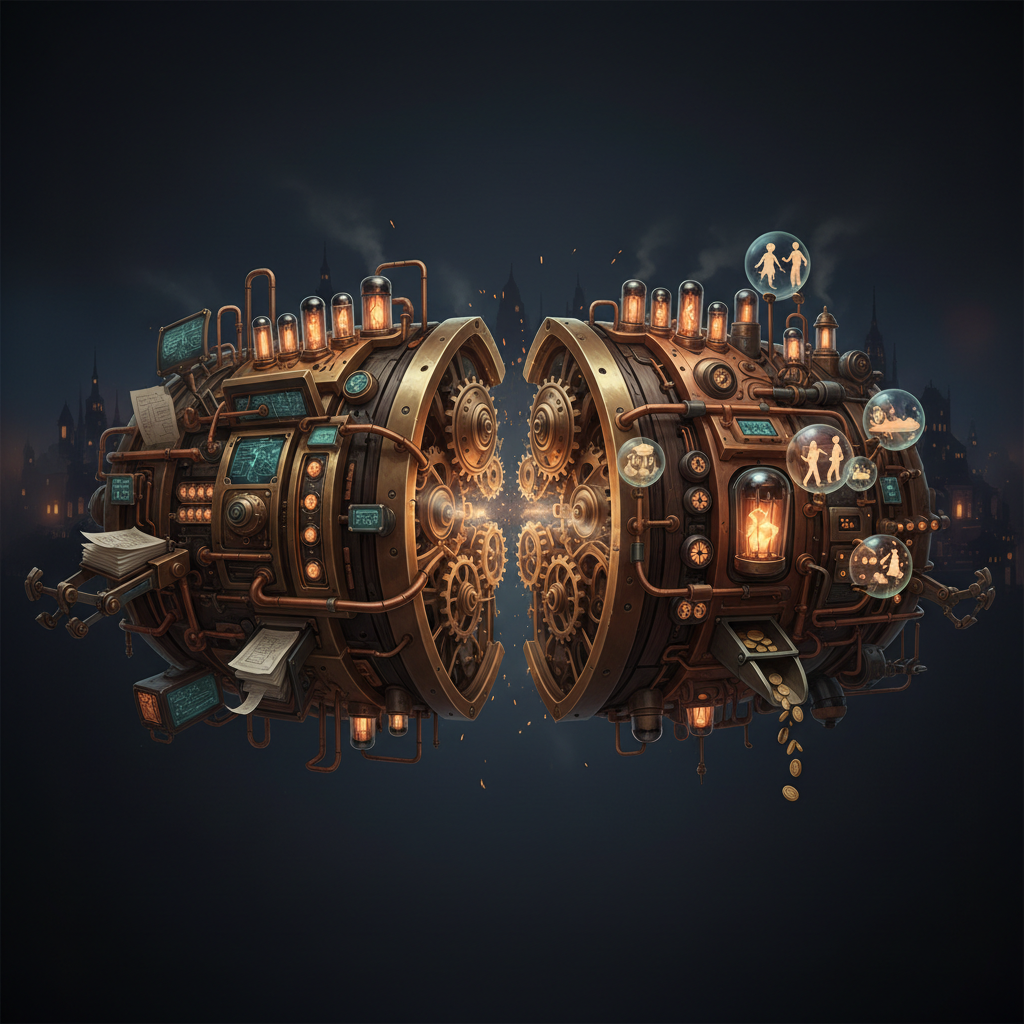
This third point is the most significant for business operators. It represents a deliberate shift away from simply demonstrating potential (like the early GPT-3 playground) towards creating products and platforms, such as the Assistants API, designed for real-world application. This strategic direction highlights an emerging split in the AI landscape: the divergence of 'consumer AI' and 'work AI'.
why it matters
This strategic clarification from a market leader like OpenAI is a critical signal for every business. The era of AI as a novelty is over. We are now seeing a clear separation between two distinct categories of AI, and understanding the difference is crucial for your planning and investment.
The emerging AI dichotomy
The distinction isn't just about who the user is; it's about the function, integration, and complexity of the AI's role within an organisation. Most businesses' experience with AI so far has been with consumer-grade tools, even when used in a professional context. The next phase is about adopting true work AI.
Here’s a comparison of the two concepts:
| Feature | Consumer AI | Work AI / Agentic AI |
|---|---|---|
| Primary Goal | General assistance, information retrieval, content creation. | Process automation, multi-step task execution, data analysis. |
| Integration | Standalone applications or light browser integrations. | Deeply integrated with core business systems (e.g., CRM, ERP, internal databases). |
| Data Context | Primarily public web data and user-provided prompts. | Access to proprietary, sensitive company data and real-time operational metrics. |
| Customisation | Limited to high-level instructions or personas. | Highly customisable; trained on specific business logic, workflows, and procedures. |
| Risk Profile | Misinformation, privacy leakage, generic outputs. | Data security breaches, operational errors, compliance failures, high-stakes hallucinations. |
OpenAI's focus on turning capability into tools is a direct enabler of this 'Work AI' category. Their platforms provide the foundational technology layer upon which businesses can build specialised, agentic systems. These are not just clever chatbots; they are digital workers designed to operate within your specific business context.
For a small business, a 'work agent' might be a system that automatically triages customer enquiries from a web form, categorises them, and drafts a tailored response for review. For a large enterprise, it could be a network of agents that manages inventory, forecasts supply chain disruptions, and automatically adjusts procurement orders based on sales data.
The implication is clear: your AI strategy needs to evolve beyond simply giving employees a ChatGPT subscription. The real productivity gains will come from redesigning core workflows around autonomous systems that execute tasks, connect to your data, and operate according to your business rules.
what to do next
To prepare for this next phase of AI adoption, businesses should move from passive observation to active planning. The focus must shift from using generic tools to building specific solutions.
-
Map Your Processes for Automation. Begin by auditing your current business operations. Identify workflows that are repetitive, rule-based, and data-intensive. Where do your teams spend the most time on manual data entry, report generation, or standard communications? These are the prime candidates for your first AI agent pilot.
-
Distinguish 'Tool' vs. 'Agent' Use Cases. Evaluate how your organisation currently uses AI. Are you using it as a tool to assist a human (e.g., drafting an email, summarising a document)? Or are you starting to think about how an agent could perform a sequence of tasks autonomously (e.g., receive an invoice, verify it against a purchase order, schedule the payment, and notify accounting)? Frame your strategic thinking around building agents, not just providing tools.
-
Start Small with a Human-in-the-Loop Pilot. Resist the temptation to automate a mission-critical process from day one. Choose a single, well-defined, low-risk task for your first project. For example, an agent that reviews inbound sales leads against a qualification checklist and assigns a score. Crucially, design the workflow with a 'human-in-the-loop' — the agent prepares the analysis or draft, but a team member makes the final decision. This builds trust, reduces risk, and allows you to refine the agent's performance safely.
-
Assess Technology and Talent Requirements. Building a work agent requires more than a simple prompt. You will need to engage with platforms like the
OpenAI Assistants API,Microsoft Copilot Studio, or other frameworks designed for building stateful, integrated agents. This may require in-house developer talent with API experience or engaging an external AI implementation partner. Start assessing your capabilities and identifying potential partners now.
Based on The AI Daily Brief: OpenAI Declares the Next Phase of AI.
Original episode: https://podcasters.spotify.com/pod/show/nlw/episodes/OpenAI-Declares-the-Next-Phase-of-AI-e3kihr0