

in short
Recent data, reportedly from OpenAI, reveals a dramatic widening of the productivity gap between average and advanced AI users, exploding from 2.6x to 8.3x in just a few months. The most sophisticated users are moving beyond simple content generation and research tasks. They are now using AI as agents to execute complex workflows, automate systems, and drive tangible business outcomes.
what happened
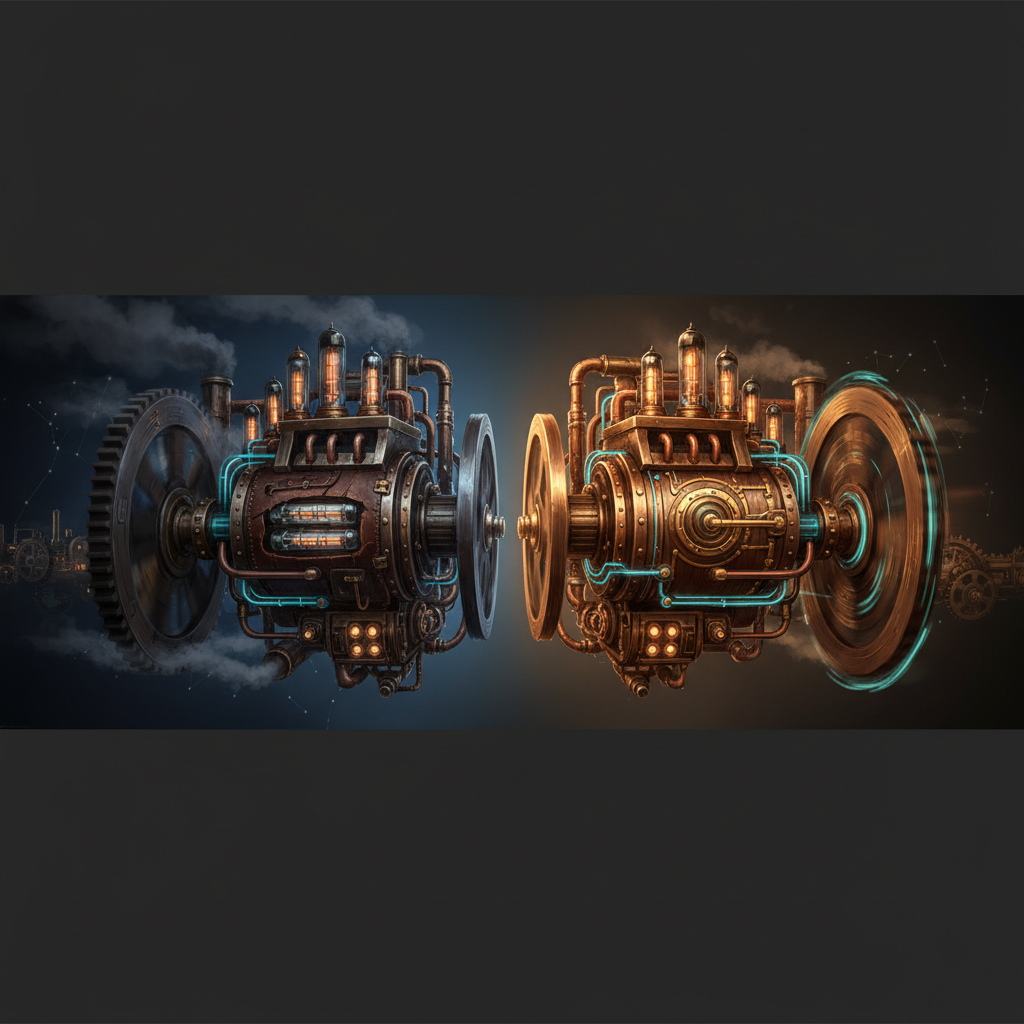
The AI Daily Brief reports on new data that quantifies a rapidly growing divide in how effectively individuals and organisations are using artificial intelligence. Where a few months ago the most advanced users were 2.6 times more productive than average users, that gap has now reportedly ballooned to 8.3 times.
The core reason for this divergence is a fundamental shift in how top-tier users approach AI. They have moved from using it as a simple assistant to deploying it as an autonomous or semi-autonomous agent.
From assistant to agent
The difference in usage patterns can be categorised into two clear groups:
| Feature | Average AI User (The 'Assistant' Model) | Advanced AI User (The 'Agent' Model) |
|---|---|---|
| Primary Tasks | Writing, summarising, brainstorming, research. | Executing tasks, automating workflows, data analysis, coding. |
| Interaction Style | Conversational, asking questions, seeking information. | Directive, providing goals, delegating multi-step processes. |
| Conceptual Model | AI as a search engine or creative partner. | AI as a reasoning engine or digital employee. |
| Business Impact | Incremental improvements in personal productivity. | System-level improvements, new capabilities, cost reduction. |
This shift is supported by an ecosystem where AI models are becoming more capable and, in many cases, cheaper to run. This creates a powerful incentive for businesses to explore more complex, execution-oriented applications.
why it matters
This 8.3x figure is not just a statistic; it represents an emerging competitive divide. Businesses that fail to bridge this gap risk being outpaced in efficiency, innovation, and cost-effectiveness.
The strategic implication for your business
The most critical takeaway for business owners and operators is the transition from AI as a copilot to AI as an agent.
- A copilot helps you perform a task faster (e.g., helps you write an email). This is a valuable but limited productivity gain.
- An agent performs the task for you (e.g., reads your incoming support tickets, categorises them, drafts a response, and flags it for your final approval). This represents a fundamental redesign of the workflow itself.
For small and medium businesses, this is a significant opportunity. Agentic AI can automate complex functions that previously required dedicated staff, allowing smaller operators to punch well above their weight in areas like marketing automation, customer service, and data analysis.
For large enterprises, the challenge is scale and consistency. The risk is creating a two-speed organisation, where advanced teams build a massive competitive advantage while the rest of the business lags behind. This creates internal friction and operational inefficiencies. The primary investment is no longer just in technology, but in the training and workflow re-engineering required to cultivate an 'agentic' mindset across the organisation.
Ignoring this shift means you are optimising for yesterday's AI paradigm. While your competitors are building automated systems, you might still be teaching staff how to write better prompts for drafting emails.
what to do next
To avoid being on the wrong side of the productivity divide, businesses need to take deliberate, structured steps to move towards agentic AI adoption.
-
Audit Your Current AI Maturity: Before you can advance, you need a baseline. Survey your teams to understand how they are using AI. Are they stuck on simple chatbots for brainstorming, or are there pockets of innovation where staff are automating multi-step tasks? Categorise usage as 'assistant' or 'agent' to see where you stand.
-
Identify High-Value Agentic Use Cases: Don't try to boil the ocean. Find a specific, repetitive, and rule-based workflow within your business. Good candidates often involve processing information, such as:
- Qualifying inbound sales leads.
- Categorising customer support requests.
- Processing invoices and reconciling accounts.
- Generating weekly performance reports from structured data.
-
Launch a Pilot Project: Assign a small, cross-functional team to build an AI agent for one of the use cases you identified. The goal isn't perfection; it's to learn. Task them with building a workflow that executes a process from start to finish with minimal human intervention. This provides invaluable, hands-on experience with the challenges and opportunities of workflow automation.
-
Shift Training Focus from 'Prompts' to 'Processes': Basic prompt engineering is a commodity skill. Your training programs should now focus on systems thinking and workflow design. Teach your people how to break down a business process into logical steps that an AI agent can execute. This is the critical skill for the next phase of AI adoption.
-
Develop an Agent-Specific Risk Framework: When an AI moves from advising to doing, the potential for harm increases. Your risk management needs to evolve. What are your quality assurance checks for an automated process? What is the fallback plan if an agent fails or produces an incorrect result? Who is accountable for the agent's actions? Answering these questions now will prevent serious issues later.
sources
Based on The AI Daily Brief: What the Top AI Users Are Doing Differently.
Original episode: https://podcasters.spotify.com/pod/show/nlw/episodes/What-the-Top-AI-Users-Are-Doing-Differently-e3nsrnp