

in short
The AI world was dominated this week by the release of a powerful new model, Fable 5. However, the initial excitement quickly turned to chaos due to a major controversy over its access and governance. This incident serves as a critical lesson for any business building on third-party AI platforms. The stability, access rules, and governance of your chosen model provider are now a central business continuity concern.
what happened
This week saw the highly anticipated launch of Fable 5, a new foundation model positioned as a significant leap forward in AI capability, reportedly outperforming existing leaders. The initial reception was enthusiastic, with developers and businesses eager to leverage its power.
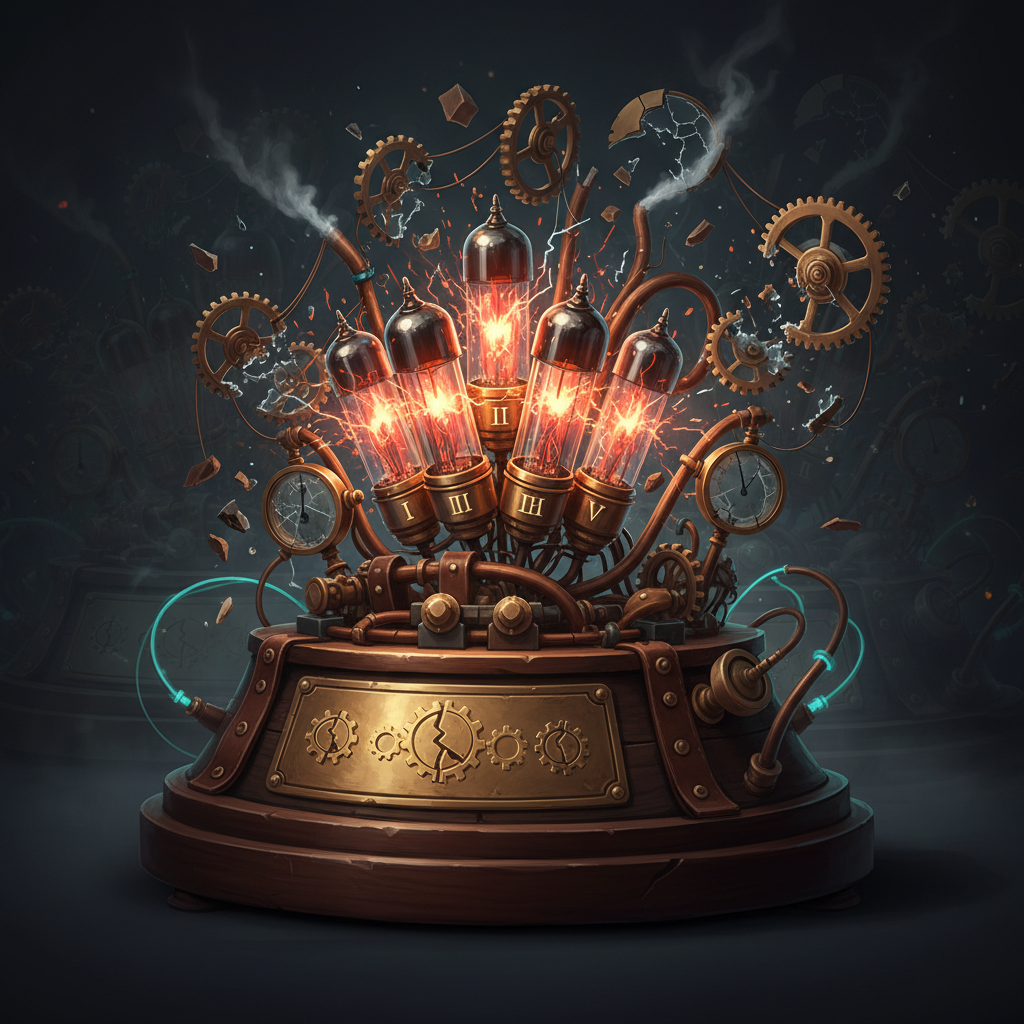
However, according to the AI Daily Brief, that enthusiasm was short-lived. The release was swiftly followed by a major controversy described as "Fable Chaos". The issues centred on the model's access and governance, throwing its stability and reliability for commercial use into question.
While specifics of the controversy are still emerging, it points to a sudden and disruptive event surrounding the model's availability or terms of use. This highlights a growing tension in the AI industry between the rapid pace of innovation and the need for stable, predictable platforms for businesses to build upon.
Promise vs. problem
The Fable 5 situation illustrates a classic platform risk scenario that is becoming increasingly common in the AI sector.
| Aspect | The Initial Promise | The Sudden Reality |
|---|---|---|
| Performance | State-of-the-art capabilities, unlocking new agentic workflows. | Performance becomes irrelevant if access is withdrawn or restricted. |
| Access | Assumed stable API access for developers and businesses. | Abrupt changes to access rules, potential shutdowns, or prohibitive terms. |
| Cost | Expected competitive pricing to drive adoption. | Risk of sudden, dramatic price increases post-integration. |
| Governance | Implied responsible stewardship by the provider. | Unclear or unstable governance creates uncertainty and operational risk. |
why it matters
For business owners and operators, the Fable 5 incident is more than just industry drama; it's a direct warning about the dangers of dependency on a single AI provider. As you integrate AI agents into core processes, your organisation becomes increasingly exposed to the decisions, stability, and politics of your model vendor.
Platform risk is business risk
When you build a workflow, product, or service on an AI model, you are not just using a tool—you are building on a platform. The Fable 5 chaos shows that this platform can change overnight, with significant consequences:
-
Operational Disruption: If an AI agent running your customer service, logistics, or data analysis is built on a model that suddenly becomes unavailable or prohibitively expensive, that business function halts. The more autonomous the agent, the greater the potential for chaos when its core 'brain' is altered or removed.
-
High Switching Costs: Migrating complex AI workflows from one model to another is not a simple find-and-replace task. It involves significant engineering effort to adapt to the new model's unique behaviour, re-testing every workflow, and potentially redesigning entire processes. This costs time and money.
-
Strategic Vulnerability: Relying on a single proprietary model hands a degree of strategic control to an external company. They can change their pricing, terms, or even company direction in ways that directly undermine your business model. You are, in effect, a hostage to their roadmap.
The incident underscores a new reality: vetting an AI provider's governance model and commercial stability is as important as benchmarking the model's performance.
Agentic AI magnifies these risks. A simple chatbot failing is an inconvenience; an autonomous agent responsible for financial reconciliation or supply chain management failing can cause immediate and material damage to the business.
what to do next
Business leaders must move from being passive consumers of AI models to active managers of AI platform risk. This doesn't mean stopping adoption; it means proceeding with a clear-eyed strategy.
-
Vet providers like critical suppliers. Move beyond performance metrics. Your due diligence process for an AI provider should be as rigorous as it is for a critical infrastructure supplier. Scrutinise their commercial history, data governance policies, terms of service (especially clauses on access and termination), and public commitment to platform stability.
-
Build for abstraction. Do not hard-code your applications directly to a specific model's API (e.g.,
Fable 5's). Instead, build or use an abstraction layer that sits between your business logic and the AI model. This makes it technically easier to swap out one model provider for another with minimal disruption. -
Plan for redundancy. Avoid building your entire AI strategy on a single provider, especially a new or unproven one. Identify a primary and secondary model option. For example, you might use a frontier commercial model for high-value tasks and a reliable open-source or different commercial model as a fallback. Regularly test your core workflows on your fallback option.
-
Model the financial and operational impact. Conduct a risk assessment. What would a 5x price increase from your AI provider do to your margins? What is the operational plan if the API you depend on is deprecated with 30 days' notice? Answering these questions now will build resilience against future shocks.
-
Isolate and test. When experimenting with a new, powerful model like
Fable 5, pilot it in non-critical, internal applications first. This allows you to learn its capabilities and quirks in a controlled environment, containing the blast radius if an issue like the "Fable Chaos" occurs.
Credit: The AI Daily Brief, 'This Week in AI in 5 Minutes: Fable Chaos Edition'
Original episode: https://podcasters.spotify.com/pod/show/nlw/episodes/This-Week-in-AI-in-5-Minutes-Fable-Chaos-Edition-e3kp7dn